

The Master Plan
Treatment planning conversations on complex cases in digital dentistry, with the decisions taken in each.
€360 every 6 months · Log in
Season 2 · 2023 · 5 episodes
Skeletal orthodontics or all-on-X
Two comparable cases, one treated with interdisciplinary skeletal orthodontics and one with all-on-X: how the decision is made.
- Mini plates to intrude upper jaw
- 1.5 mm shrinkage baked into design
- One implant too many, for simple bridges
01 The assumption17 min
Every complex case starts from the problem, then an assumption on how to solve it. Here mouth breathing led to crowding and decay, and the plan rests on intruding the upper jaw.
7 chapters
- Two cases where everything changes
- Tracing how the case began
- From narrow arch to decay
- The assumption: intrude the maxilla
- Smile design from the face
- Placing the library in 3D
- Restorative first, then ortho
02 Synergies23 min
Synergies between surgery, orthodontics and prosthetics. One centralised plan instead of two, mini plates for the intrusion, and implants placed in time to become anchorage for the last phase of ortho.
9 chapters
- One centralised plan
- A shared case record
- Mini plates and implant anchorage
- Fully guided surgery
- Thresholds, not absolute precision
- Monolithic or layered
- Natural shapes for monolithic
- Finals and consistent provisionals
- Commit to the plan
03 All on X: FP120 min
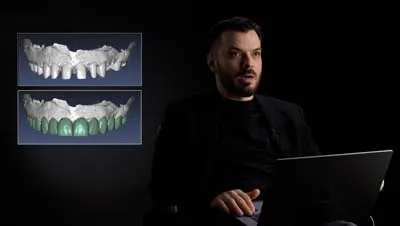
Florin highlights the main issues in FP1 cases: papillae, emergence profiles and material fractures. The answer starts in the design, by assuming 1.5 mm of shrinkage and baking it in.
9 chapters
- Why all-on-X in the maxilla
- The problems of FP1
- Baking in shrinkage
- Planning for a higher lip
- Zeniths that enlarge papillae
- Staging to avoid a flap
- Fractures and implant distribution
- Rules for distribution
- Buried distal implants
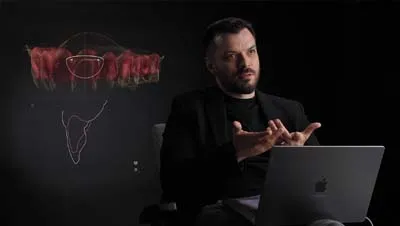
04 Shorter bridges19 min
Shorter span bridges and more palatal implants against fractures, a transitional provisional that leaves room for the papillae, and finals made from scan data alone. Likely one implant too many, traded for simple bridges.
9 chapters
- Palatal implants, thicker connectors
- A transitional provisional
- Healing under the provisional
- Why scan errors stop mattering
- Finals from scan data alone
- Models and zirconia bridges
- Horizontal emergence profiles
- More implants, simpler prosthetics
- Plan early, keep it simple
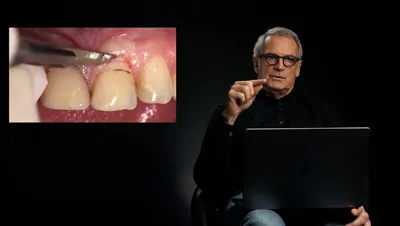
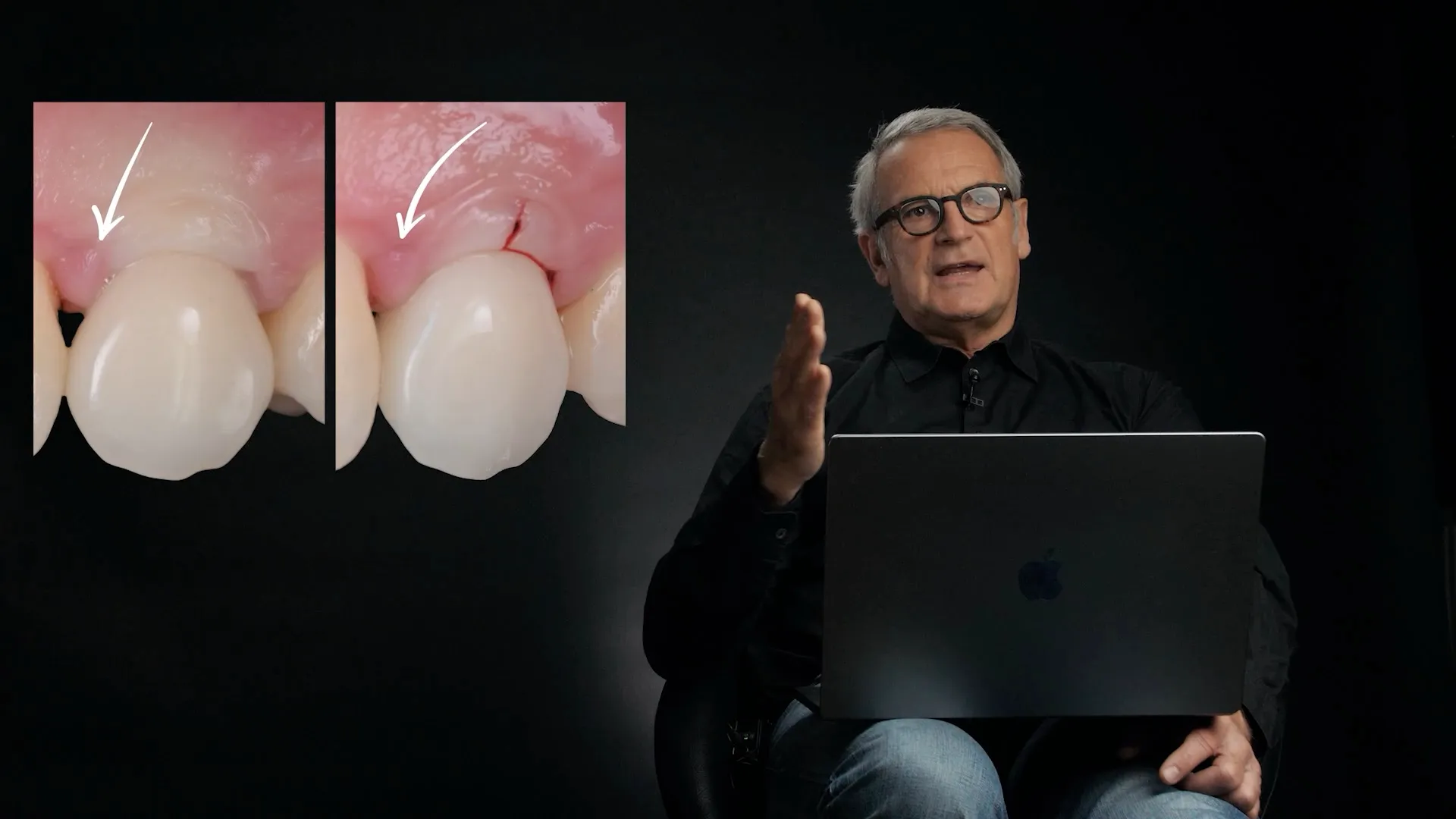
05 Creative details21 min
Eric shares a crown lengthening technique that displaces the soft tissue instead of only resecting it. Resection on the centrals, incision and displacement on the lateral, finals bonded on day three.
11 chapters
- Where displacement came from
- The case and the sequence
- Data before crown lengthening
- Planning the gingival levels
- Resecting on the centrals
- Incise and displace on the lateral
- Closed-flap bone correction
- Bonding finals on day three
- Nine months later
- Then and now
- Incise and push, or resect
Season 1 · 2022 · 5 episodes
Reworking an aged crown and bridge
Re-planning old crown and bridge work done to compensate an orthodontic problem, with serious functional challenges.
- Zenith line raised, midline kept
- The molars come out
- Aligners during 90 days of healing
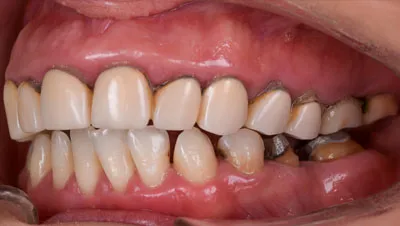
01 Bits and bytes26 min
Digital dentistry starts with data. Pictures, videos, intraoral scans and CBCT, and what each one shows in this case: lip incompetence, a high angle and a gummy smile that only appears on video.
8 chapters
- The patient and her intent
- Consultation as data acquisition
- Lip incompetence and a high angle
- Skeletal discrepancy on video
- Old work, roots and tissue
- Why documentation is standardised
- Patient first or data first
- The virtual patient over time

02 Design decisions and implications36 min
The smile design and treatment roadmap. Keeping the midline, raising the zenith line instead of starting from the incisal edge, and what crown lengthening means for attached tissue, arch space and the molar furcations.
15 chapters
- Design and plan as one
- Setting up the smile design
- Keeping the midline
- Raising the zenith line
- Crown lengthening and attached tissue
- Maxillary taper and furcations
- Moving everything apically
- Incisal edge position
- Proportion and the wireframe
- Papilla, contact and embrasure
- A showroom of natural shapes
- Consent through visualisation
- Why a mock-up is hard here
- A 2D outcome for consent
- Choosing virtual or physical

03 The xyz equation21 min
The 2D design moved to 3D before execution. Placing the shapes where a future prep is possible, to copy natural morphology as closely as possible, and the key decision of the case: removing the molars.
7 chapters
- Design as an xyz equation
- From 2D to 3D
- Prep line and copy line
- Profiles after crown lengthening
- Removing the molars
- Occlusion decision tree
- Motion and the new bite
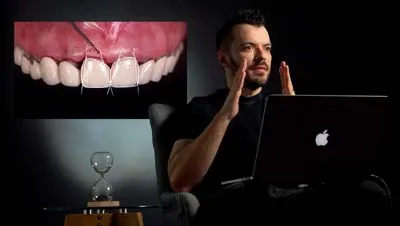
04 The team game19 min
Florin as the architect and the team he picks: an endodontist, Johnny Barbur for ortho, Ioana Popp in the lab, the Giordani brothers for surgery, Mădălina Socol for logistics. Then choosing the crown lengthening technique, flap or flapless.
7 chapters
- The architect runs the case
- Picking the team
- Shared planning, then cleanup
- Flap or flapless
- Marking zeniths and incisions
- Prosthetically guided healing
- Endo, build-ups and provisionals
05 Finale26 min
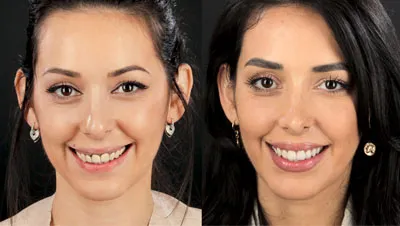
A fresh dataset, implants 3 mm below the future zenith, aligners during the 90 days of healing, and preps at the planned depth before the bone is reshaped. Every step adjusts the mouth to the design.
11 chapters
- A fresh dataset
- Implant depth and position
- Screw-retained by design
- Preps at the planned depth
- Chamfer shape and bone
- Implants in the same surgery
- Healing adapts to the design
- Fixing a shadow without reshaping
- Healing and the final scan
- One ceramic on teeth and implants
- Final dataset and outcome
Watch The Master Plan and the whole library
One pass, €360 every 6 months: every Dentcof series and season, on any device. Cancel anytime.
Already a member? Log in