

 STARConcept
Star Concept
STAR (Save Three Acceptable Retentions) is a prosthetically driven workflow for full-arch implant restorations, with live surgery and step-by-step cases.
€360 every 6 months · Log in
Few R's · 2025 · 5 episodes
Few retentions, healed edentulous sites
A full-arch case with largely healed edentulous sites and few retentions.
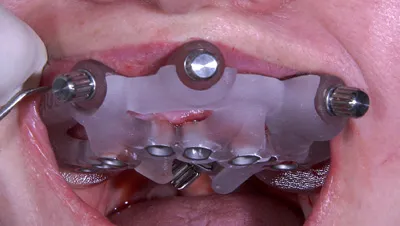
- Stacked guides fixed with pins
- Teeth set 1.5 mm in for shrinkage
- Two soft molar implants left out
01 The case21 min
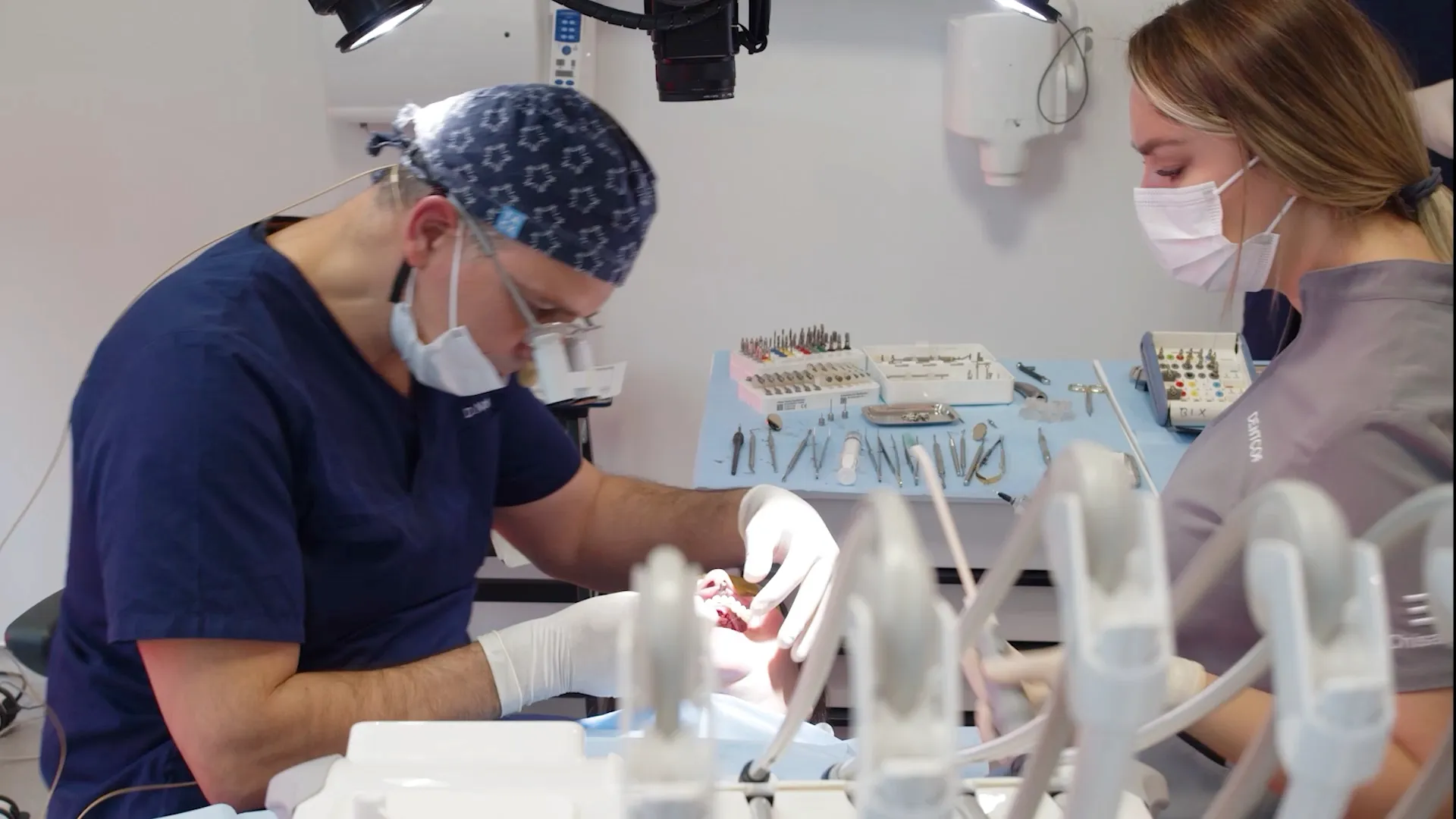
Only three teeth, and not in good positions for a guide. Florin explains how skeletal class and the worst papilla decide an FP1, and David starts with stacked guides, pins and the extractions.
9 chapters
- What an FP1 needs
- Skeletal class first
- Plan around the worst papilla
- Stacked guides and pins
- Pontics hitting the bone
- Pins under buccal anesthesia
- Scan reference and guide play
- Extractions, hardest first
- The guide does not seat
02 The guide16 min
Florin on positioning the teeth: going up costs display, lip support and airway, and setting them about 1.5 mm in anticipates shrinkage. David then frees the tissue with a palatal roll flap so the implant guide can seat.
6 chapters
- What going higher costs
- Airway without dogma
- Teeth set 1.5 mm inward
- Where papillae can survive
- Palatal roll flap
- Seating the implant guide
03 What to keep16 min
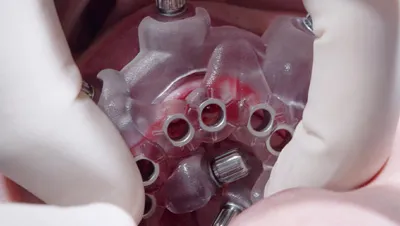
Florin on the design mindset: banking roots, splitting the bridge, and what makes this case hard one year after the final. Meanwhile David places the implants by hand, starting with the one that holds the guide.
7 chapters
- What to keep, what to change
- Protocol or the best result
- Why this case is hard
- First implant holds the guide
- By hand, mixed implant types
- Remaining implants, one drill
- A pontic on the bone
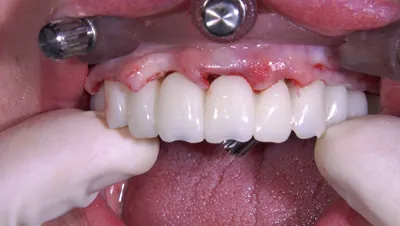
04 Molars left out19 min
Multi-units go on, pontics are trimmed where the heat map shows bone contact, and the two molar implants in about 5 mm of soft bone stay out of the bridge. Then the cylinders are picked up through the guide.
6 chapters
- Implants in, drivers out
- Second guide off
- Multi-unit height and torque
- Heat map and pontic trim
- Molar implants left out
- Pick-up through the guide
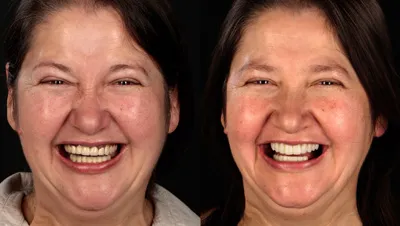
05 Finale7 min
David finishes the bridge, PMMA around the cylinders and flow on the tissue side, then adjusts the occlusion with minimal sutures. The episode ends with the case six months later.
3 chapters
- Finishing around the cylinders
- Bridge in, occlusion adjusted
- Minimal sutures
STAR · 2025 · 8 episodes
Full arch with the STAR Concept
The science, planning and live surgery of a full-arch case, from the basics to its specific particularities.
- Roots banked for proprioception
- Palatal pins position the bridge
- Needs three stable, well-spread teeth
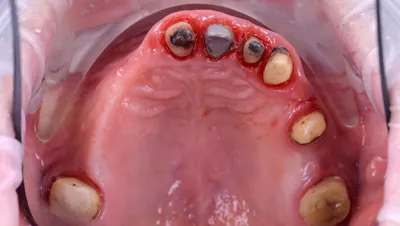
01 Synopsis20 min
David distrusted guided surgery for years; tooth-borne support is what makes a guide accurate. Then the team plans the case: roots kept for proprioception, Adrian's rolled tissue, and where to cut.
9 chapters
- Two kinds of full-arch patient
- From freehand to planning
- Why guides are underused
- Sources of guide inaccuracy
- Tissue support decides accuracy
- Remaining teeth and banked roots
- Design and rolled tissue
- Planning the incision
- Components for the provisional
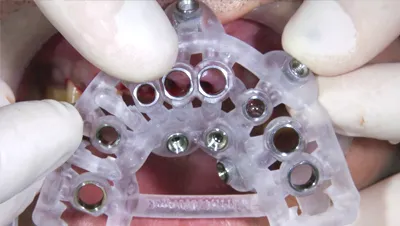
02 Live surgery. Live explaining.20 min
David starts the surgery, intercut with his lecture: fully guided rather than pilot drills, short versus long sleeves, and the bone mill. Extractions, punches through the guide, and the first implant next to the remaining teeth.
8 chapters
- Fully guided, not pilot drills
- Guidance before drilling
- Never skip the bone mill
- Hand side and freehand accuracy
- Provisional off, extractions
- Guide seated, punches marked
- First osteotomy, under-prepared
- First implant through the guide
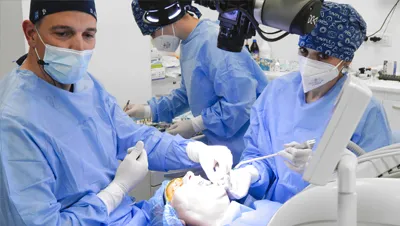
03 Rollin'20 min
The surgery goes on, and so does the lecture: David's move to guided surgery, what a guide costs, and the temporary as the hard part of all-on-X. Implants go in one by one, under-prepared in soft bone.
9 chapters
- Outsourced implant planning
- What a guide costs
- A guide for the prosthesis
- Why the temporary is hard
- Guide held by the first implant
- Soft bone at the molar
- Under-prepared posterior implants
- Bone mill on the anterior sites
- Sockets checked, palatal approach
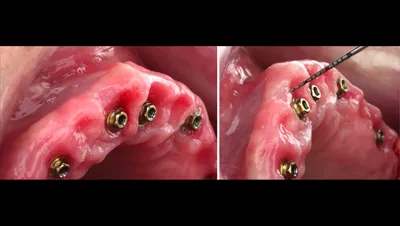
04 More tinkering17 min
Where STAR comes from: a 2017 case where three teeth were kept as a tripod for the guide. Then the prosthetic side while the last implants go in: depth is never accurate, multi-units at least 2 mm, anchor pins for the temporary.
9 chapters
- How STAR got its name
- The 2017 tripod case
- Implant order and depth
- Multi-units at least 2 mm
- Same-day bridge and PMMA
- V3 implant, apical anchorage
- Last implant, heavy under-prep
- Palatal anchor pins
- Abutments on, bridge checked
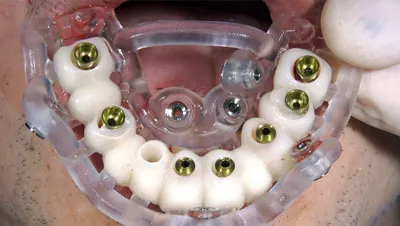
05 Provisional guide21 min
Multi-units go deeper where an implant sits too shallow, the canine and premolar roots are banked below the bone, and the bridge goes on over the cylinders with the guide pinned. The cylinders are picked up without moving anything.
9 chapters
- Molars kept to the end
- Guide and smile design
- Insertion key, no anchor pins
- Multi-units and depth
- Banking the roots
- Implant deeper, abutments torqued
- Fitting the bridge on cylinders
- Picking up the cylinders
- Finishing and a graft
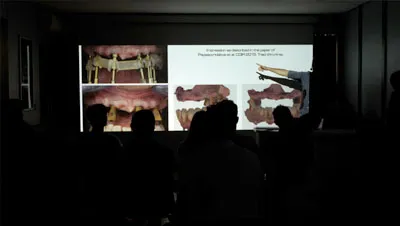
06 GBR. Torque.15 min
Last details before the bridge goes in: why David plans eight implants and uses only straight multi-units, two tuberosity grafts pushed into a pouch, and every screw torqued on the bridge.
6 chapters
- Why plan eight implants
- Only straight multi-units
- From healing to the final
- Implants as osteotomes
- Tuberosity grafts into a pouch
- Securing grafts, bridge in
07 Everything in place14 min
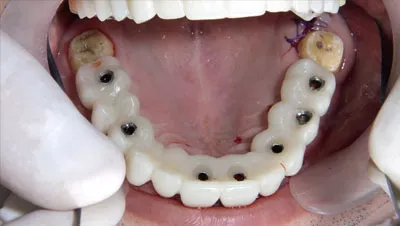
David goes over the whole data flow: the 2D smile design, 3D teeth, the implant plan, the bridge, and a second guide that positions it. Back in the mouth, the sockets are filled and the bridge is torqued to 35 Ncm.
7 chapters
- Terminal dentition at 40
- Teeth first, then implants
- From 2D design to implants
- A second guide for the bridge
- A design in minutes
- Filling the sockets
- Bridge in, torqued to 35
08 Finale22 min
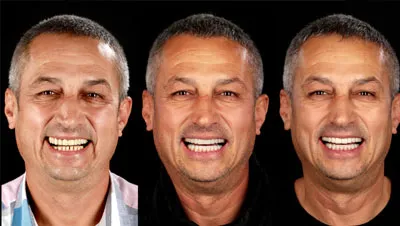
The closing lecture: palatal pins that position the bridge, why the final bridges sit on temporary cylinders, and the limit of STAR, at least three stable, well-spread teeth. Then the final outcome and how the case healed.
12 chapters
- Palatal pins position the bridge
- Two guides for this case
- Step by step through the guide
- Pins drilled after the implants
- A lower class III case
- Bridge fixed by the pins
- Healing without grafts
- Impressions and narrow abutments
- Finals on temporary cylinders
- Flexure of the lower jaw
- The limit of STAR
- Final outcome
Watch Star Concept and the whole library
One pass, €360 every 6 months: every Dentcof series and season, on any device. Cancel anytime.
Already a member? Log in